 Mthombeni Energy Revenue protection
Recommendations: the fix follows the monitoring
We don't start with a product to sell. We measure the building first, find the areas that use the most electricity and the gaps that cost the most, and only then recommend what to do. You decide, and the monitoring shows whether it worked.
What a recommendation includes
The finding
What the monitoring or the reconciliation showed, and since when.
What it costs you now
The kWh and rand at stake each month, where the data supports a figure.
The options
What could be done about it, from a billing correction to new equipment, and what each would take.
How we'll know it worked
What the monitoring should show after the fix, so the result is measured, not assumed.
How we work, explained
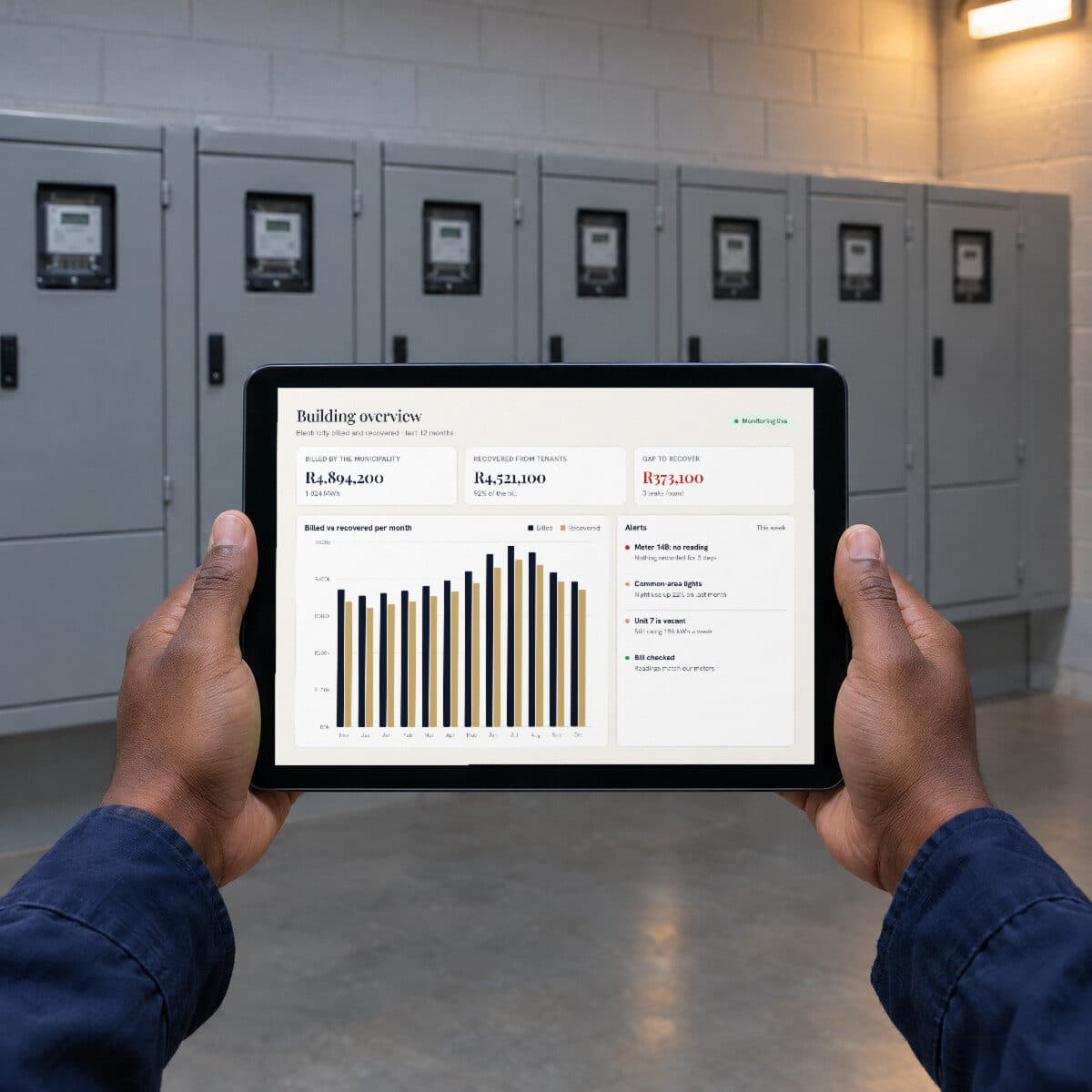
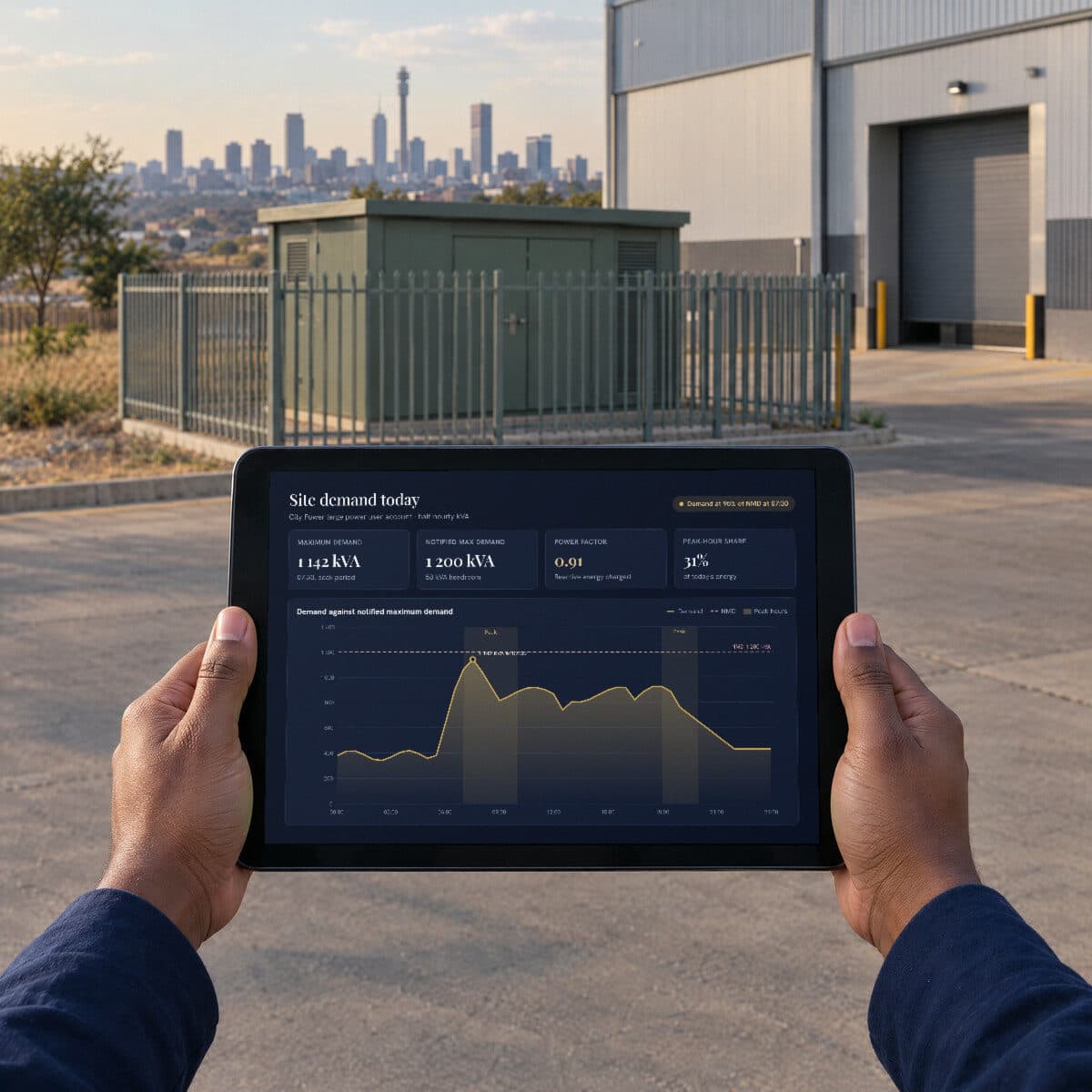
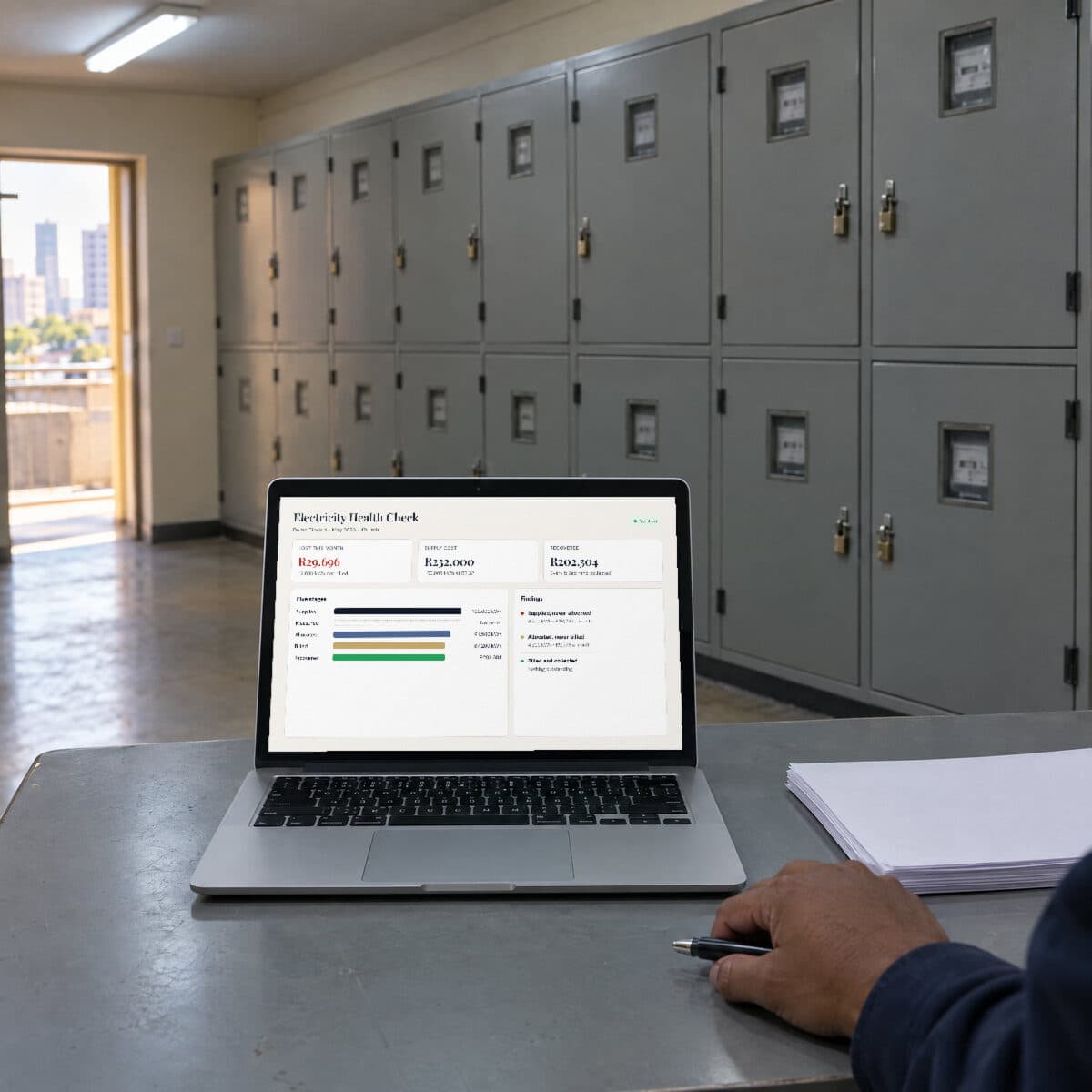
Pictures are illustrations of the work described.
How it works
- 1Monitoring and reconciliation show where the electricity goes and where it leaks.
- 2Each finding comes with a recommendation and the options.
- 3You decide what to act on, and who does it. Electrical work by Mthombeni Electrical & Data is quoted in writing first.
- 4The monitoring after the fix shows whether it worked.
The fix follows the monitoring
What a finding can lead to
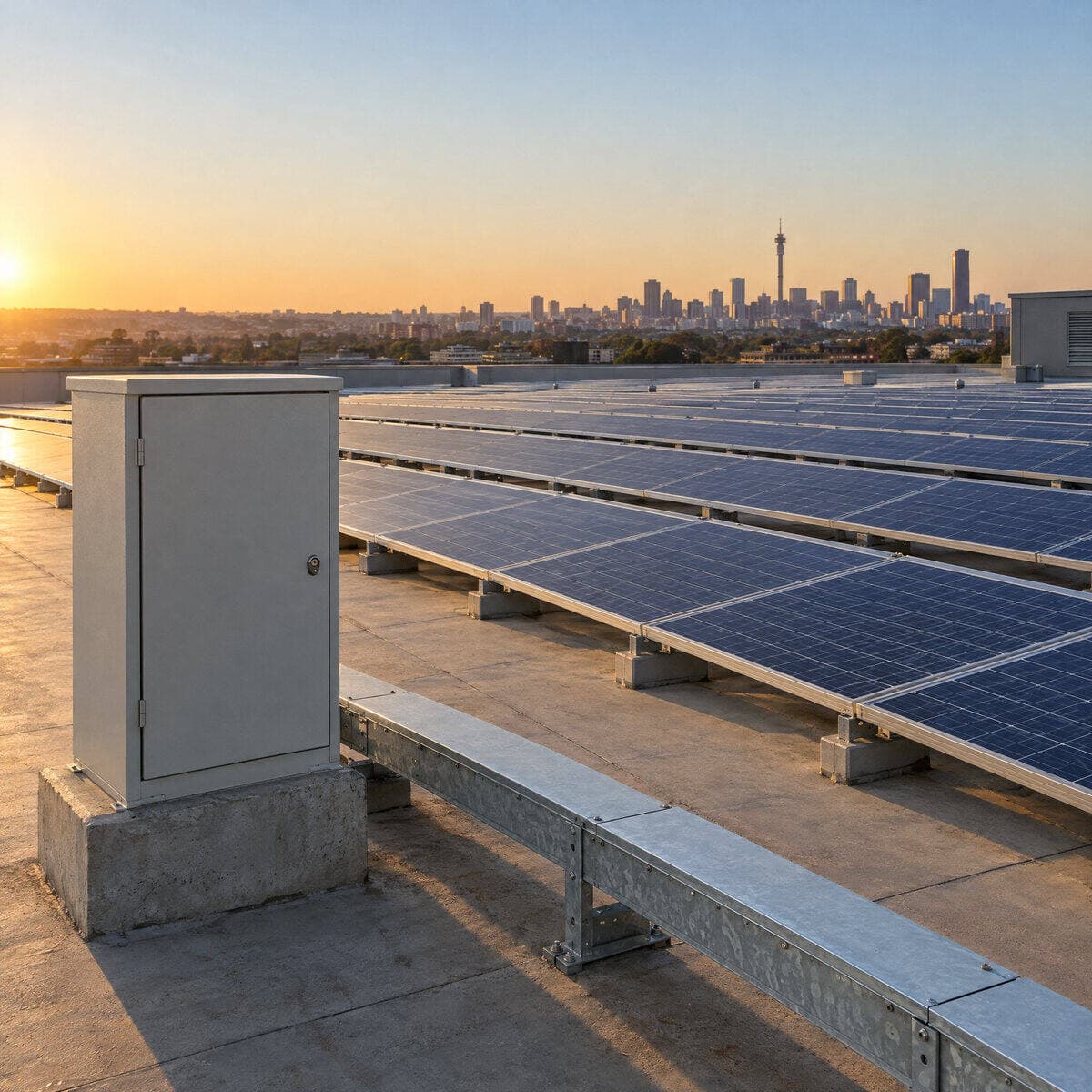
We recommend a fix only once the monitoring shows what is using the electricity and when. You decide what to do. Electrical work is quoted in writing, done by Mthombeni Electrical & Data and signed off with a Certificate of Compliance.
Solar panels
When the building has a steady daytime load the roof can carry.
More about thisPower factor correction
When reactive energy or power factor charges show up on the bill.
Moving loads out of peak hours
When pumps, chillers or charging run in the expensive time-of-use periods.
Metering fixes and sub-meters
When common areas aren't metered, a meter is faulty or units share one.
More about thisBilling and recovery corrections
When units are allocated or billed less than they used.
A query on the supply authority's bill
When the bill doesn't match the tariff or your own meters. You decide; we give you the evidence.
The intelligence layer
How Mthombeni Energy works
We don't guess at the fix. We measure the building first, and the monitoring decides what is worth doing.
- 01
Measure
Readings from your bulk and sub-meters, the supply authority's bills, what each unit was allocated and billed, and what was collected.
- 02
Reconcile
Supplied, measured, allocated, billed and recovered, month by month, with each gap in kWh and in rand.
- 03
Find
Where the building uses the most electricity and when, and where units go unbilled, unpaid or unmetered.
- 04
Report and recommend
A monthly report with analytics, and a recommendation for each finding, based on what the monitoring showed.
- 05
You decide
You choose what to act on: correct the billing, recover from tenants, query the bill or fix the cause. We track each finding to an outcome.
Mthombeni Energy
The rest of Mthombeni Energy
- Start hereElectricity Health CheckWhere it starts: 12 to 24 months of bills, meter readings and tenant records reconciled, with every leak priced in rand.
- Consumption monitoringSee where the building uses the most electricity and when: after-hours use, common areas, demand peaks and meters that stop.
- Revenue reconciliationSupplied, measured, allocated, billed and recovered, every month, with each finding tracked to an owner, a due date and an outcome.
- Bill and tariff auditsCity Power, Tshwane, Ekurhuleni and Eskom bills checked against the tariff in force and your own meters.
- Reports and analyticsA monthly report your finance team can check, with analytics on where the electricity goes and what changed.
- Large power usersStops leaks on City Power large power user bills in Johannesburg: bill and demand audits, check metering, and monitoring with monthly analytics reports.
Start here
The Electricity Health Check
Twelve to twenty-four months of your bills, meter readings and tenant records, reconciled stage by stage. You see where the building leaks, what it costs you each month, and what we would look at first.
Request a Health Check
Recommendations start with the data. Leave your name and number and we'll call you back about an Electricity Health Check, or message us on WhatsApp.
Questions
Do we have to use you for the fixes?
No. You decide what to do and who does it. If you want us, Mthombeni Electrical & Data quotes the electrical work in writing and signs it off with a Certificate of Compliance.
Will solar panels fix it?
Sometimes. It depends on how much the building uses during the day and what the roof can carry. The monitoring shows the load profile first, so the recommendation is based on your building, not on a rule of thumb.
When does power factor correction make sense?
When the bill shows reactive energy or power factor charges, usually on demand-billed sites. The monitoring shows how much they cost and whether correction would remove them.
How do we know a fix worked?
Because the monitoring carries on. The months after the fix are compared with the months before, in the same report.
Related services
- Consumption monitoringSee where the building uses the most electricity and when: after-hours use, common areas, demand peaks and meters that stop.
- Solar installationSolar PV designed for your roof and usage, installed and signed off with a CoC.
- Large power usersStops leaks on City Power large power user bills in Johannesburg: bill and demand audits, check metering, and monitoring with monthly analytics reports.
- Reports and analyticsA monthly report your finance team can check, with analytics on where the electricity goes and what changed.
We cover Johannesburg, Sandton, Randburg, Roodepoort, Soweto, Midrand, Centurion, Pretoria, East Rand (Ekurhuleni), West Rand. Areas we cover