 Mthombeni Energy Revenue protection
Large power users in Johannesburg
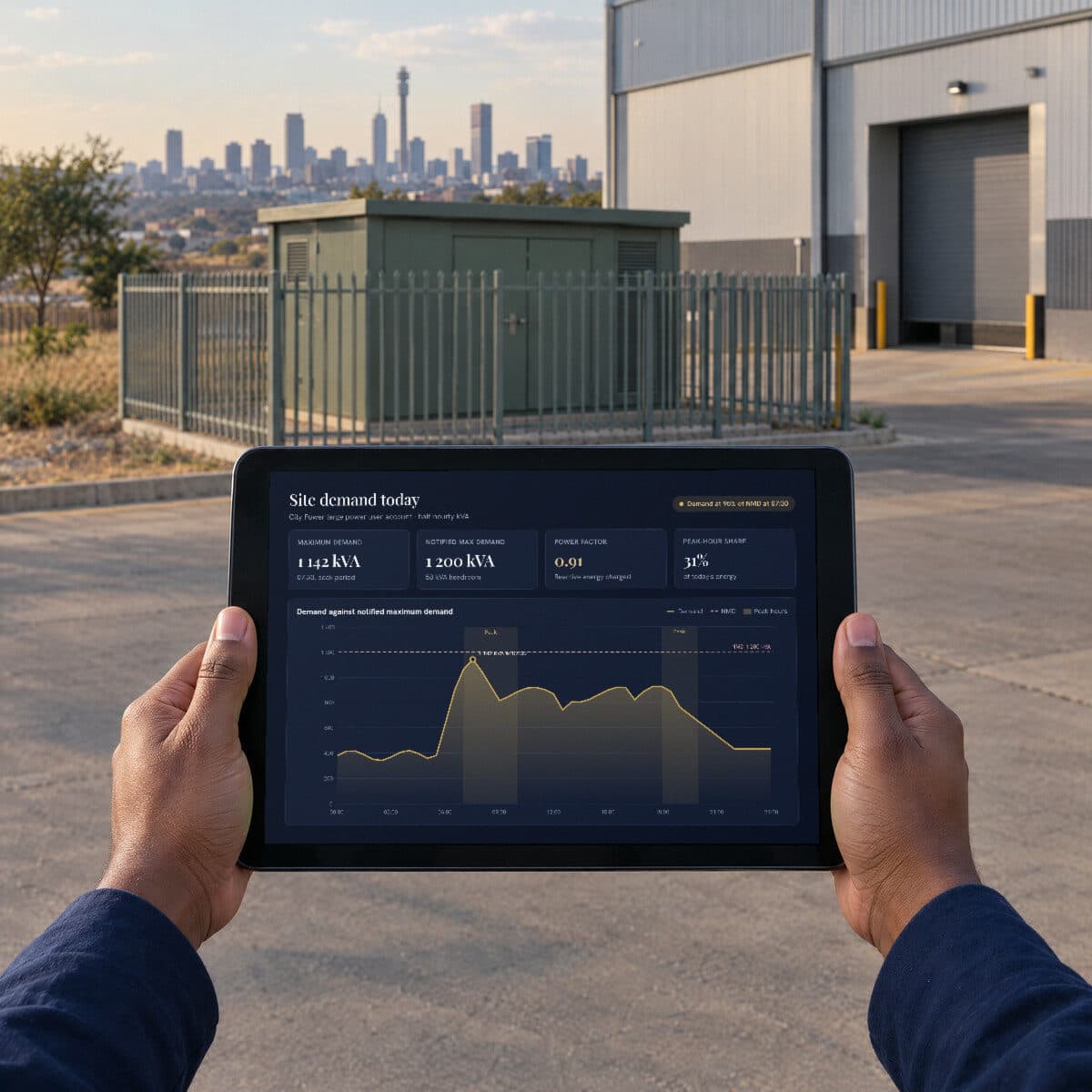
On a City Power large power user account, the bill depends on more than the units you use. Demand, notified maximum demand, power factor and time-of-use rates all add to it, and errors are easy to miss. Mthombeni Energy finds what you're overpaying and stops the leaks: we check City Power's readings and keep watch, with a report and analytics every month.
Worth a check if
- Your bill changes a lot from month to month
- You pay demand or network charges nobody has explained
- You see reactive energy or power factor charges on the bill
- Your notified maximum demand hasn't been reviewed in years
- Readings are estimated, or don't match what the site uses
Where large power user bills leak
Maximum demand
Demand charges are set by your busiest period in the month, so one badly timed start-up can set the charge for the whole month.
Notified maximum demand
Go over it and you can pay penalties. Set it too high and you pay every month for capacity you never use.
Power factor
A poor power factor shows up as reactive energy charges. Power factor correction can bring them down.
Time-of-use rates
Units cost more in peak hours and in the winter high-demand season. Moving flexible loads out of peak hours lowers the bill without using less.
Billing errors
Estimated readings, the wrong tariff or a wrong meter multiplier. We check the bill line by line against your own readings.
How we work, explained
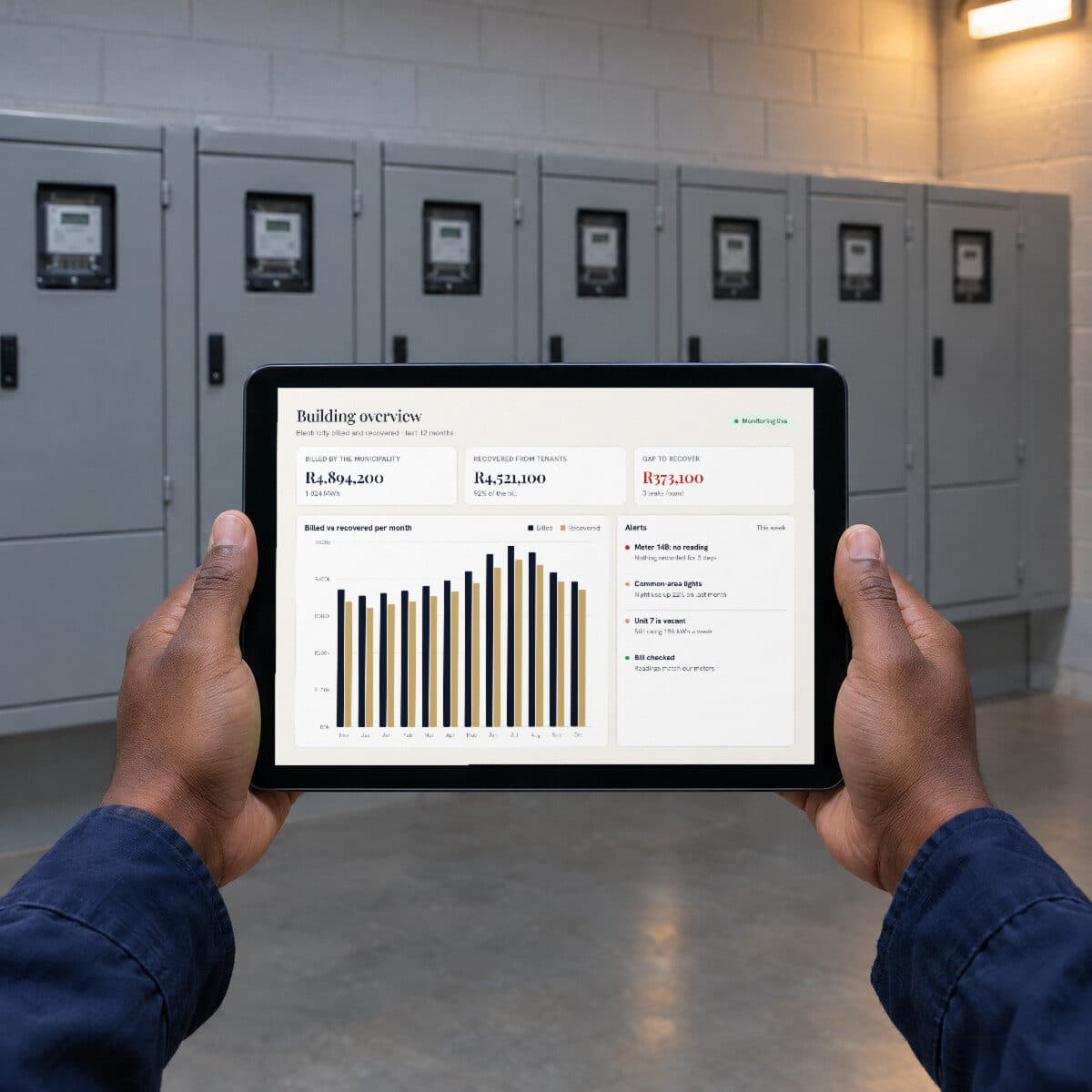
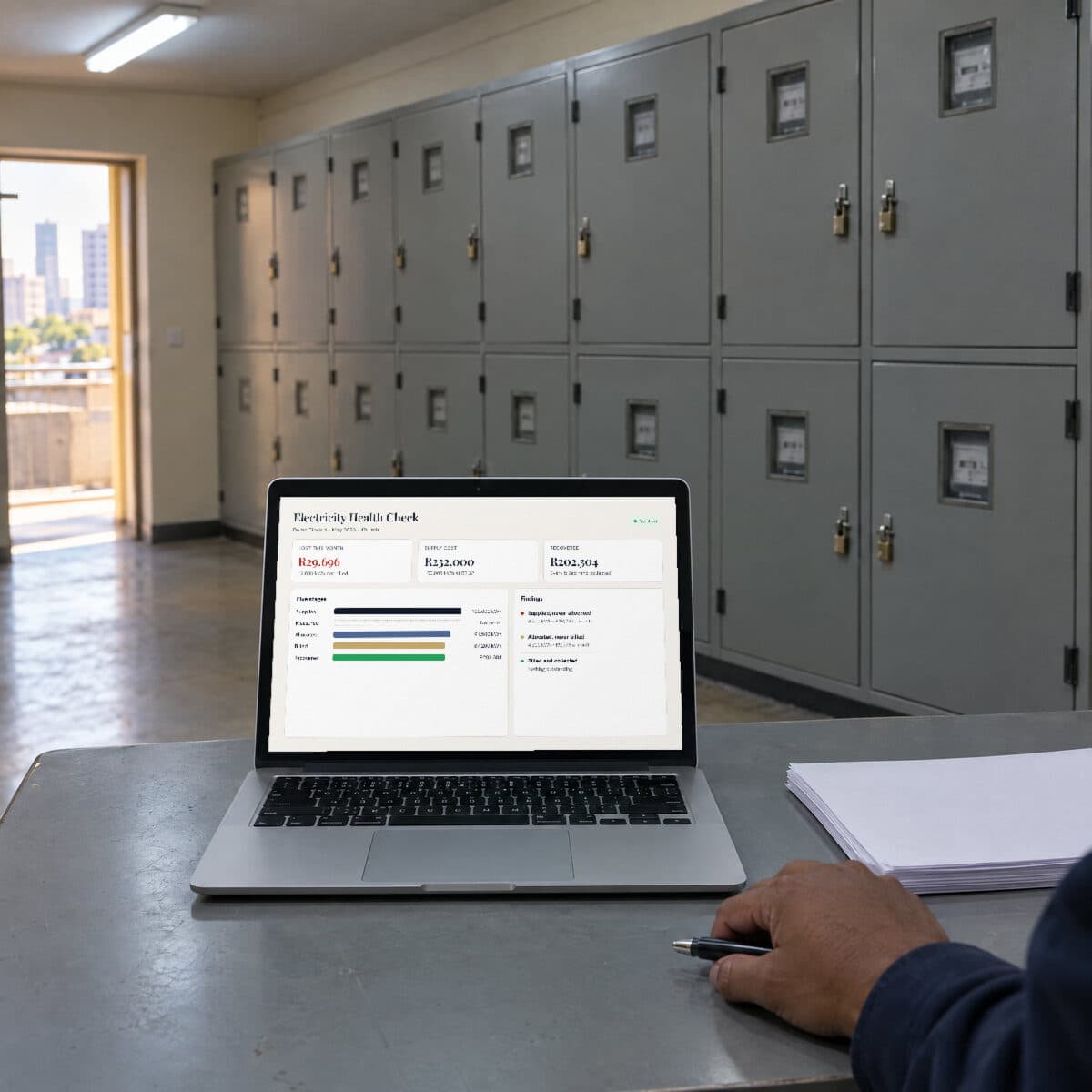
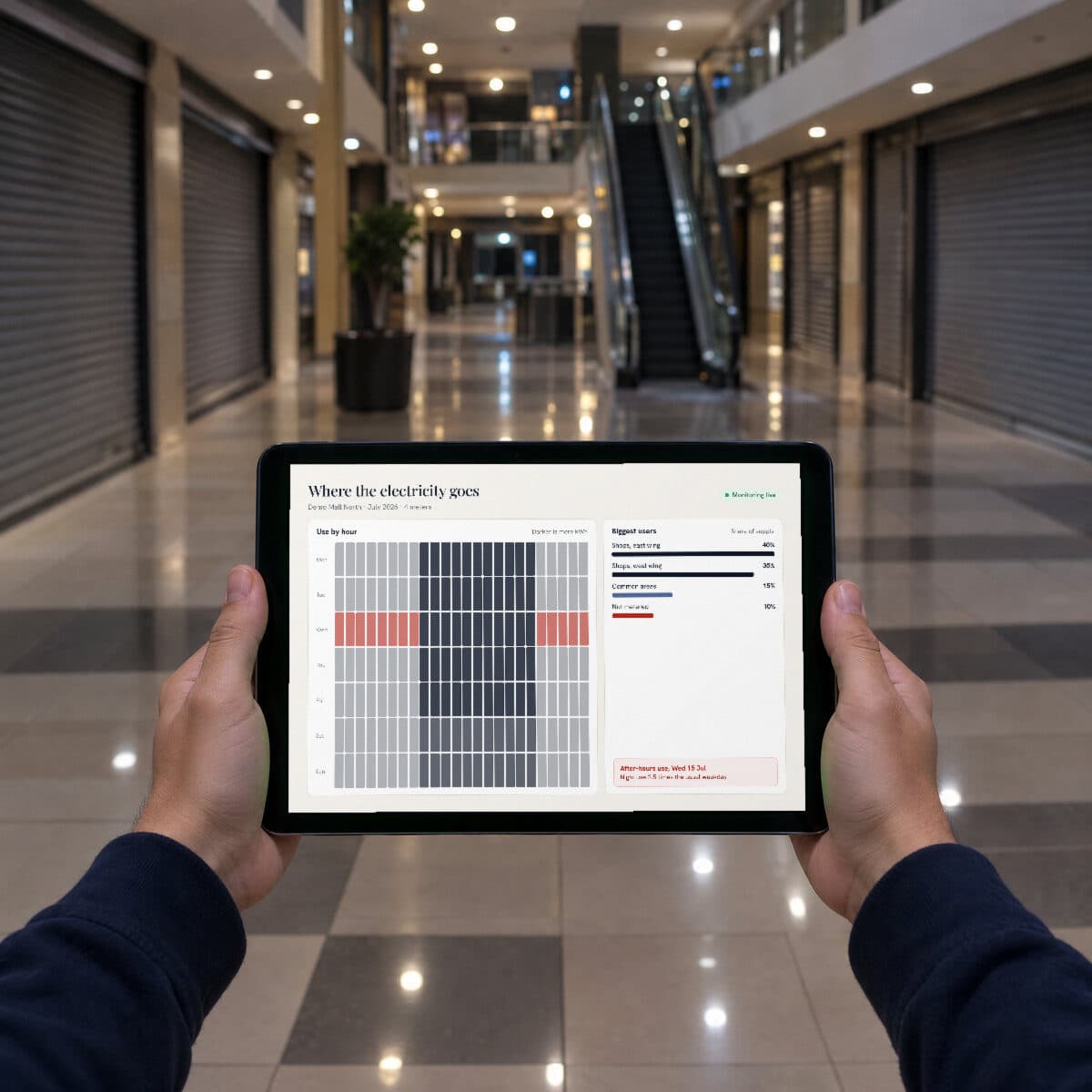
Pictures are illustrations of the work described.
How it works
- 1Send us 12 to 24 months of City Power bills. We check the tariff, demand, notified maximum demand, reactive energy and every reading.
- 2A written report of what you're overpaying, in rand, with what to fix first.
- 3Check metering on your side of City Power's meter, so their readings can be verified every month.
- 4Monthly monitoring with a report and analytics: what set your maximum demand, which loads can move out of peak hours, and what the bill would be with a different notified maximum demand, tariff, power factor correction or solar. Alerts when demand nears your notified maximum demand, power factor drops or the supply goes off.
- 5A recommendation for each finding, from load scheduling to power factor correction, peak shaving with batteries or solar, or a notified maximum demand review. You decide what to do, and any electrical work is quoted separately.
Every month
Six checks on every month's data
Each check has a threshold set per building. When one trips, it becomes a finding with an exposure in rand where it has one.
- Allocation gapMore electricity supplied than was allocated to units.
- Billed below allocatedUnits allocated more kWh than they were billed for.
- Invoice above the tariffThe supply authority's rate is higher than the tariff in force for that month.
- Demand charge mismatchThe demand charge doesn't match the maximum demand times the demand rate.
- After-hours useNight-time use well above the same weekday over the previous four weeks.
- A meter that stopsA live meter that hasn't recorded for days, so its units go unbilled.
The fix follows the monitoring
What a finding can lead to
We recommend a fix only once the monitoring shows what is using the electricity and when. You decide what to do. Electrical work is quoted in writing, done by Mthombeni Electrical & Data and signed off with a Certificate of Compliance.
Solar panels
When the building has a steady daytime load the roof can carry.
More about thisPower factor correction
When reactive energy or power factor charges show up on the bill.
Moving loads out of peak hours
When pumps, chillers or charging run in the expensive time-of-use periods.
Metering fixes and sub-meters
When common areas aren't metered, a meter is faulty or units share one.
More about thisBilling and recovery corrections
When units are allocated or billed less than they used.
A query on the supply authority's bill
When the bill doesn't match the tariff or your own meters. You decide; we give you the evidence.
Mthombeni Energy
The rest of Mthombeni Energy
- Start hereElectricity Health CheckWhere it starts: 12 to 24 months of bills, meter readings and tenant records reconciled, with every leak priced in rand.
- Consumption monitoringSee where the building uses the most electricity and when: after-hours use, common areas, demand peaks and meters that stop.
- Revenue reconciliationSupplied, measured, allocated, billed and recovered, every month, with each finding tracked to an owner, a due date and an outcome.
- Bill and tariff auditsCity Power, Tshwane, Ekurhuleni and Eskom bills checked against the tariff in force and your own meters.
- Reports and analyticsA monthly report your finance team can check, with analytics on where the electricity goes and what changed.
- RecommendationsThe fix follows the monitoring: solar panels, power factor correction, load shifting or billing fixes. You decide.
Start here
The Electricity Health Check
Twelve to twenty-four months of your bills, meter readings and tenant records, reconciled stage by stage. You see where the building leaks, what it costs you each month, and what we would look at first.
Request a Health Check
Leave your name and number and we'll call you back about an Electricity Health Check of your bills. Have your last few City Power bills ready, or send them to us on WhatsApp.
Questions
What is a large power user?
A City Power customer on a large power user tariff, usually a business with a bulk supply that is billed on demand as well as energy. Your bill shows your tariff. If you're not sure, send it to us and we'll tell you.
Do you work on City Power's meter?
No. City Power's meter and supply belong to City Power. We install check metering on your side of it, and when a bill looks wrong we give you the evidence. You decide whether to take it up with City Power.
We're supplied by Eskom directly. Can you help?
Parts of Johannesburg are supplied by Eskom directly, on Eskom's tariffs, which work differently. Ask us and we'll tell you what applies to your site.
Will you change our notified maximum demand for us?
The application is yours to make. If the monitoring shows your notified maximum demand no longer fits, we show you what it costs you now and what a different level would cost, so you can decide.
What does it cost?
We tell you the price of the Health Check before we start. Monitoring and any fixes are quoted in writing once we know the site.
Who delivers the service?
Mthombeni Energy, our energy monitoring business. It runs through a dedicated company set up with a specialist partner, which runs the monitoring and the monthly reports with analytics. All electrical work is done by Mthombeni Electrical & Data (Mthombeni Electrical & Data Services (Pty) Ltd) to SANS 10142-1 and signed off with a Certificate of Compliance.
Related services
- Bill and tariff auditsCity Power, Tshwane, Ekurhuleni and Eskom bills checked against the tariff in force and your own meters.
- Consumption monitoringSee where the building uses the most electricity and when: after-hours use, common areas, demand peaks and meters that stop.
- RecommendationsThe fix follows the monitoring: solar panels, power factor correction, load shifting or billing fixes. You decide.
- Solar installationSolar PV designed for your roof and usage, installed and signed off with a CoC.
We cover Johannesburg, Sandton, Randburg, Roodepoort, Soweto, Midrand, Centurion, Pretoria, East Rand (Ekurhuleni), West Rand. Areas we cover